
{{ js_integration_head_start() }} {{ head_elements() }} {{ head_css() }} {{ head_js() }} {{ js_integration_head() }} {{ include_default_custom_css(content.include_default_custom_css, template_meta.include_default_custom_css, domain_settings.include_default_custom_css) }} {{ include_attached_css(content_group.attached_stylesheets or domain_settings.attached_stylesheets, content.enable_domain_stylesheets, template_meta.enable_domain_stylesheets, theme_meta.enable_domain_stylesheets, domain_settings.enable_domain_stylesheets) }} {{ include_attached_css(template_meta.attached_stylesheets, content.enable_layout_stylesheets) }} {{ include_attached_css(content.attached_stylesheets) }} {{ require_attached_js(template_meta.attached_js) }} {% if not suppress_hubdb_hreflang %} {% endif %}
Skip to content
English
  • There are no suggestions because the search field is empty.

Reviewing your conversation

Rereading or relistening to what you said is one of the best ways to improve. Depending on your organization's setup, your simulation may stay available to review afterwards.

From your history

Open your session history, then the simulation you're interested in. There you'll find your debrief and, if recording is enabled in your organization, the conversation itself.
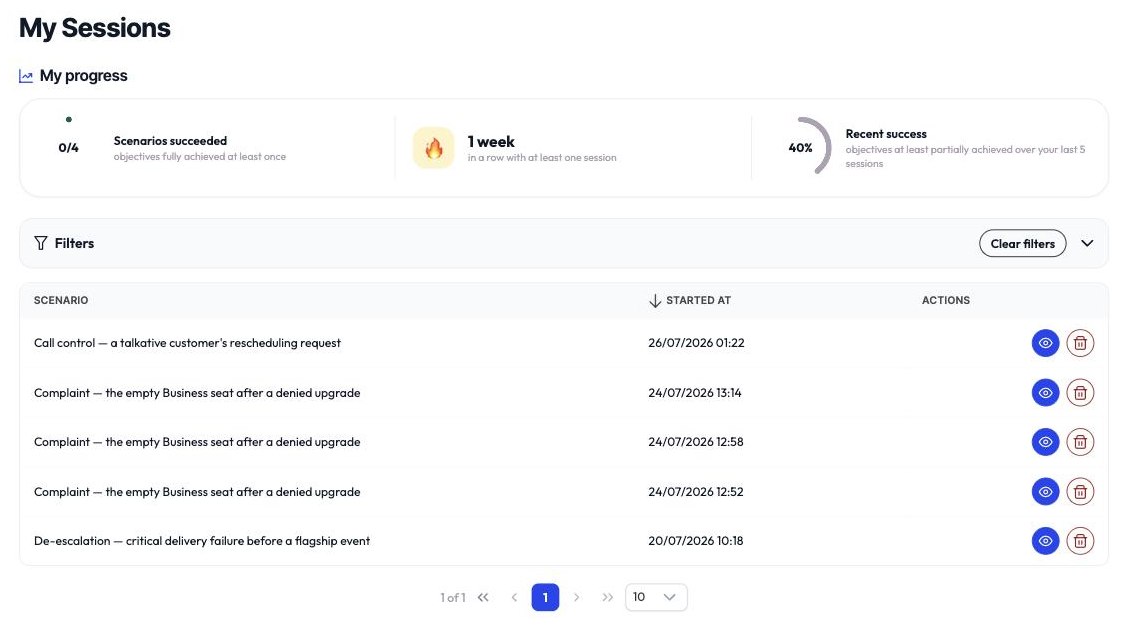
My Sessions: the list of your past simulations

Recording and transcript

When your organization allows it, you can review the recording of the exchange and read its transcript, presented as a conversation. It's a chance to spot a word, a tone or a silence you didn't notice in the moment.
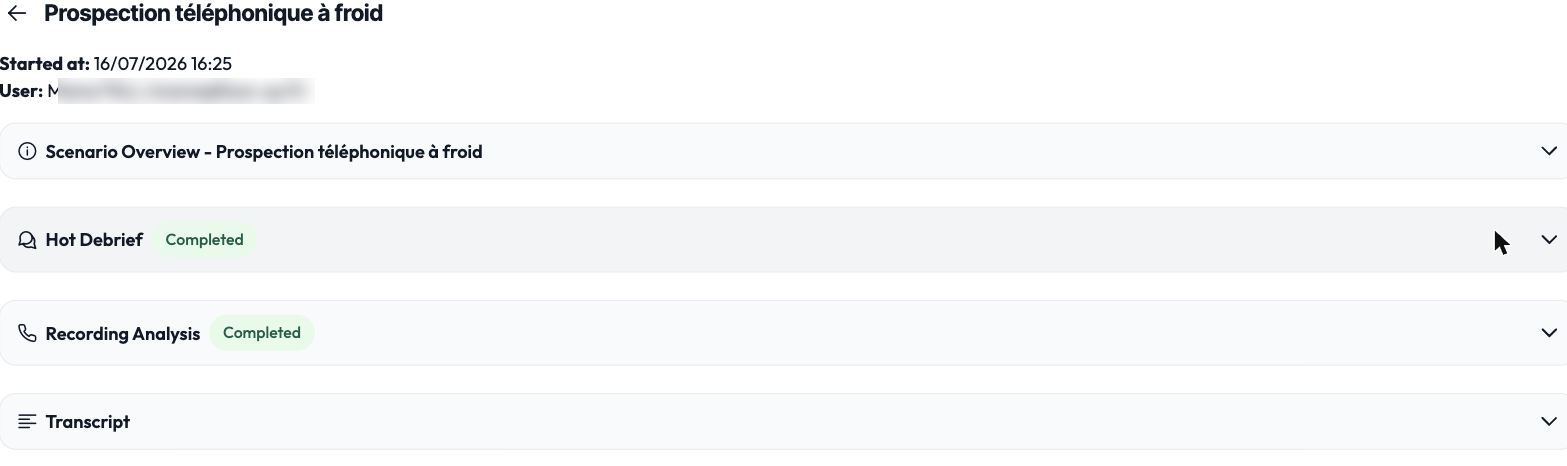
A session detail: debrief, recording analysis and transcript

If nothing is recorded

To protect personal data, some organizations turn recording off. In that case, the conversation isn't kept: you keep your debrief, but not the video or the transcript. That's a choice made by your organization.

A question about your data? See Are my audio and video recorded?