
{{ js_integration_head_start() }} {{ head_elements() }} {{ head_css() }} {{ head_js() }} {{ js_integration_head() }} {{ include_default_custom_css(content.include_default_custom_css, template_meta.include_default_custom_css, domain_settings.include_default_custom_css) }} {{ include_attached_css(content_group.attached_stylesheets or domain_settings.attached_stylesheets, content.enable_domain_stylesheets, template_meta.enable_domain_stylesheets, theme_meta.enable_domain_stylesheets, domain_settings.enable_domain_stylesheets) }} {{ include_attached_css(template_meta.attached_stylesheets, content.enable_layout_stylesheets) }} {{ include_attached_css(content.attached_stylesheets) }} {{ require_attached_js(template_meta.attached_js) }} {% if not suppress_hubdb_hreflang %} {% endif %}
Skip to content
English
  • There are no suggestions because the search field is empty.

How the conversation unfolds

This is the heart of the exercise: a live, spoken conversation with your counterpart. Here's what to expect.

Speak naturally

Talk to your counterpart the way you would in real life. They listen and respond out loud, taking into account what you say. No need to search for the "perfect" wording: let the conversation move forward.
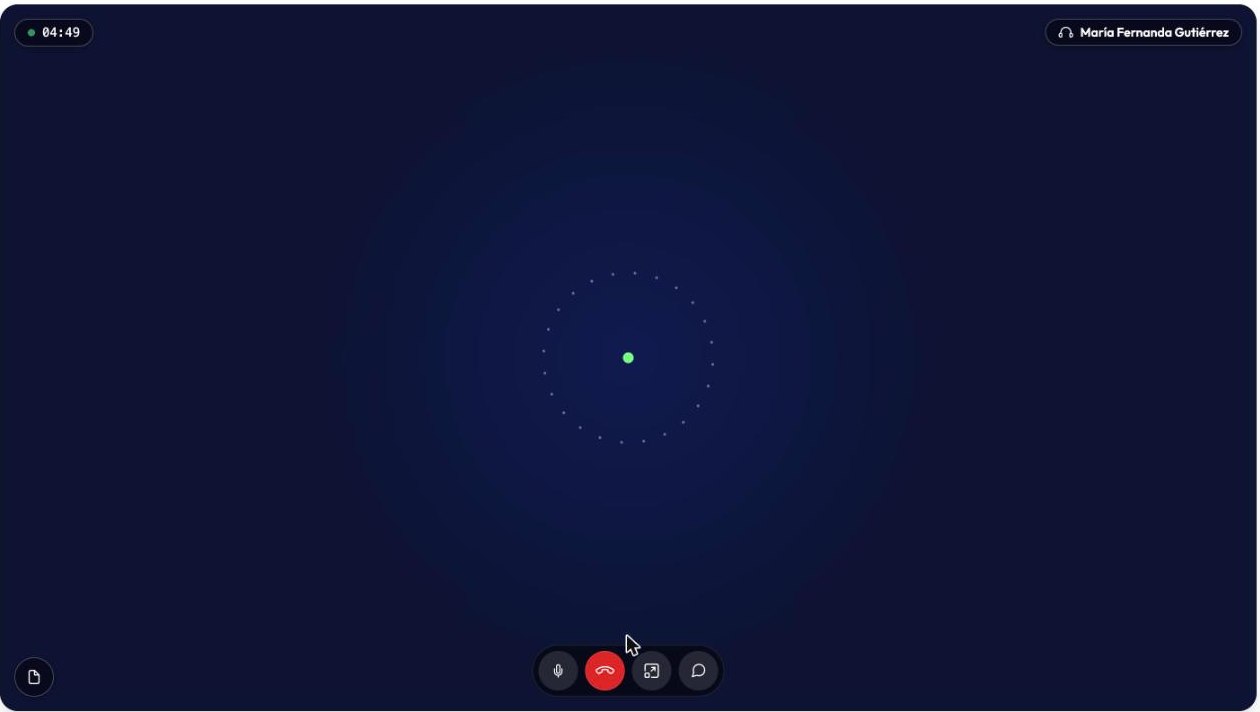
The conversation screen during a simulation

Your on-screen cues

During the exchange, a few elements support you:

  • A timer shows the time remaining.
  • Subtitles can be turned on to read on screen what your counterpart is saying.
  • A cheat sheet stays available if the scenario provides one, to keep your objectives in view.
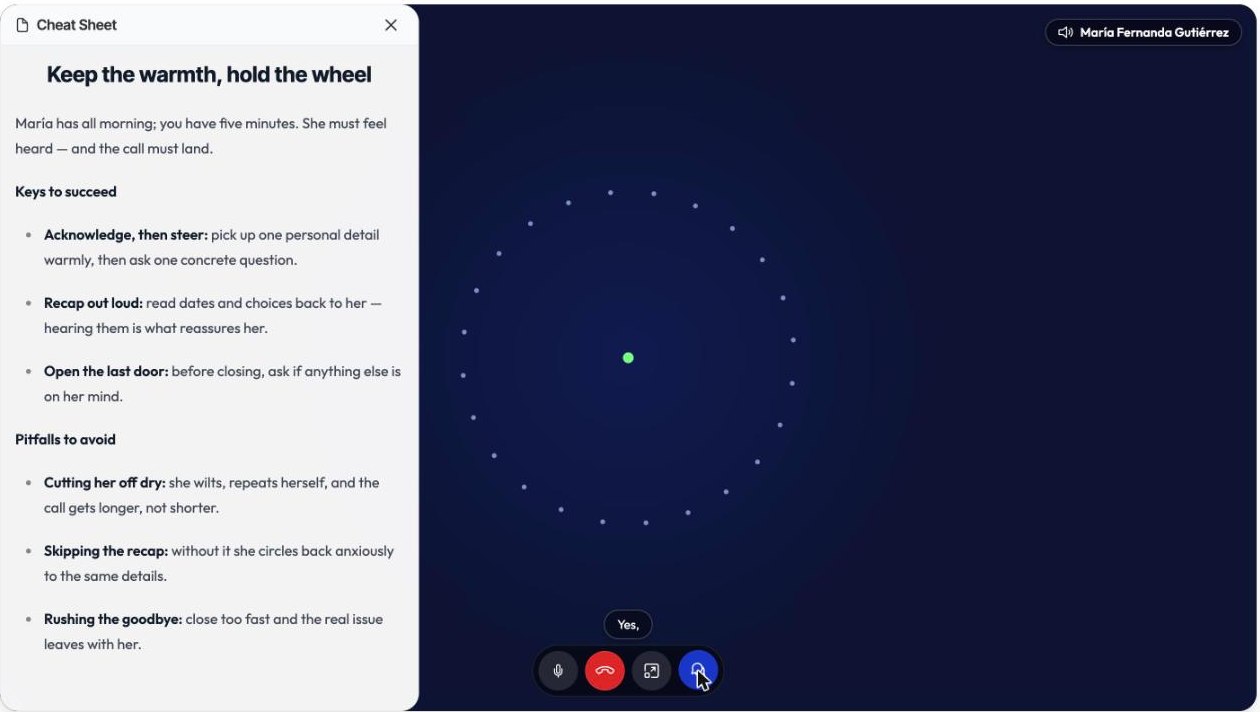
The cheat sheet open during the conversation

Wrapping up

When you feel you're done, or when time runs out, the simulation ends and Face Up takes you to your self-assessment and then your debrief.

See Session length and how to end it and What is a Face Up debrief?