Some debriefs include a score. It's a useful marker, as long as you understand what it means, and what it doesn't mean.
A marker, not a judgment
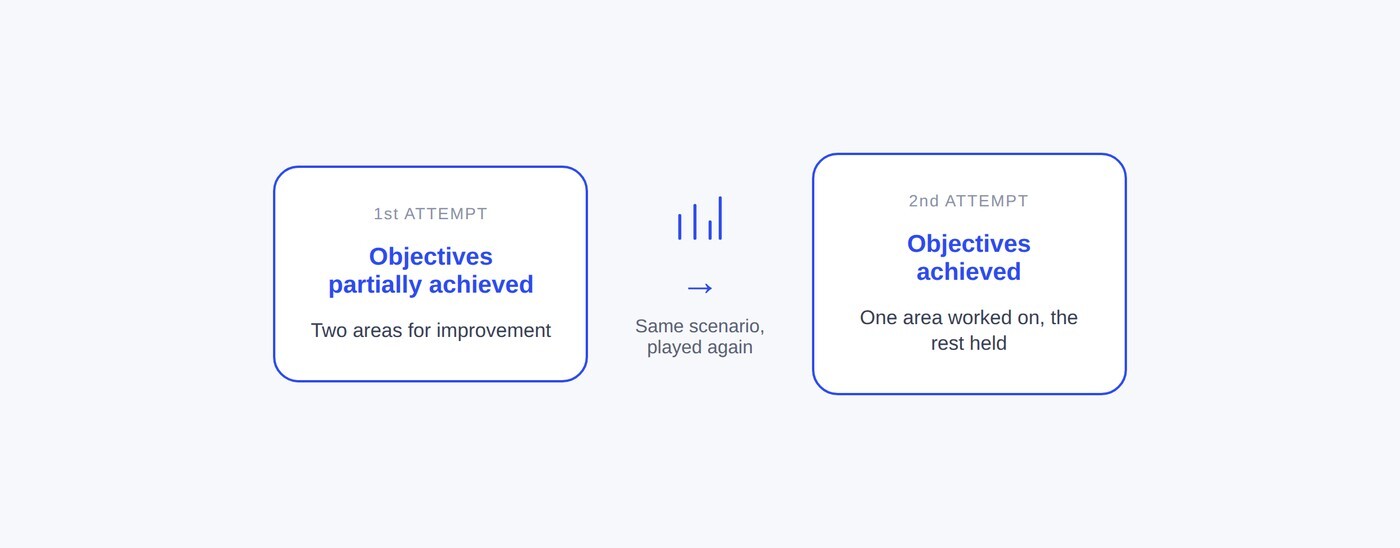
The score sums up your performance on the situation you practised in a single number. See it as a compass for your progress: it helps you gauge where you stand and measure how you improve when you redo a scenario. It's not a value judgment about you.

How to read it
A higher score means you got closer to the scenario's objectives. A more modest score simply points to room for progress, which your debrief details right next to it. What matters most isn't the number in isolation, but how it evolves from one simulation to the next.
Don't stop at the number
The score opens the reading; it's the strengths and areas for improvement that help you move forward. After each simulation, go beyond the score: that's where the concrete advice is.
See Reading your debrief.
If your organization connects Face Up to a training space (LMS), your score may be reported there automatically.